The Collection Due Process Hearing: The 30-Day Letter That Can Stop an IRS Levy
Buried in the paragraph text of a Letter 1058 or an LT11 is a deadline that most taxpayers never notice until it has already passed. Here's what a Collection Due Process hearing actually does, what it can't do, and why the date on the envelope matters more than almost anything else in the case.
The Notice That Starts the Clock
Before the IRS levies a bank account or garnishes a paycheck, the law requires it to tell you first. That notice arrives as Letter 1058, Notice LT11, or sometimes CP90, each titled some version of "Final Notice of Intent to Levy and Notice of Your Right to a Hearing." A parallel notice, Letter 3172, does the same job after the IRS files a Notice of Federal Tax Lien against your property. Both letters exist because of IRC Sections 6320 and 6330, which give taxpayers a statutory right to a hearing before the IRS Independent Office of Appeals before certain collection actions take effect.
The letter looks like dozens of other IRS notices stacking up in a drawer somewhere, and that's exactly the problem. Taxpayers who are already behind on a balance often set these aside with the rest of the correspondence, assuming another one will follow. For a Collection Due Process notice, there usually isn't a follow-up. The 30-day window to request a hearing runs from the date printed on the letter, not the date you open the envelope, and not the date you finally decide to deal with it.
Form 12153 and the 30 Days You Don't Get Back
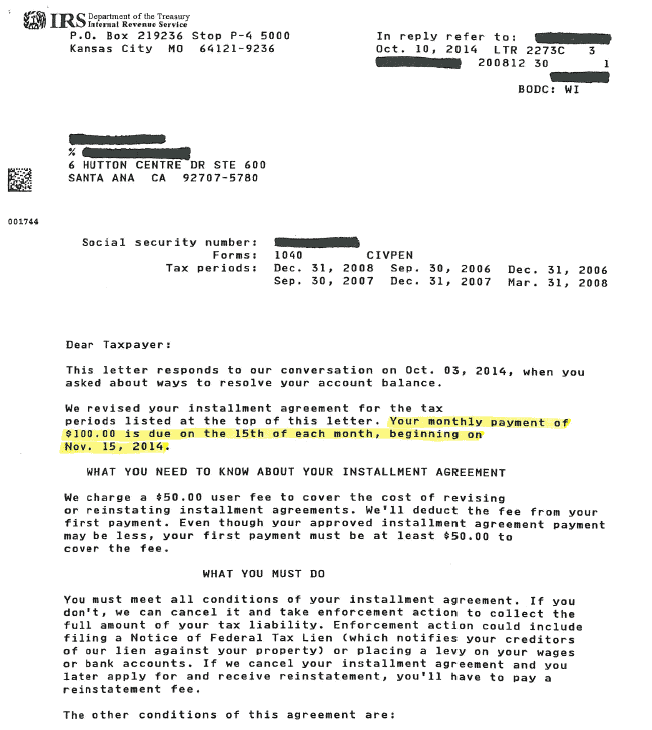
Requesting the hearing means filing Form 12153, Request for a Collection Due Process or Equivalent Hearing, within 30 days of the date on the levy notice, or within the window tied to the lien notice. The form itself is short, but it requires something taxpayers often skip: a stated reason for disagreeing with the lien or levy, or a specific collection alternative you're proposing instead, such as an installment agreement or an Offer in Compromise. A bare request with no stated basis gives Appeals less to work with and can slow the process down.
Mail it to the address on the notice, by certified mail if you want a dated record of when it left your hands. The IRS measures timeliness from the postmark, and a request that arrives late because it sat on a desk for three weeks doesn't get a second chance. This is the step where representation matters least for legal complexity and most for simple discipline: someone whose job is to track the date gets it filed before the date matters.
What Actually Happens at the Hearing
A timely request routes the case to a Settlement Officer in the IRS Independent Office of Appeals, someone who had no prior involvement in the collection action against you. That independence is the point: the person deciding your case isn't the Revenue Officer who issued the levy notice. The hearing itself is usually conducted by phone or correspondence rather than in person, and it's less a courtroom proceeding than a structured negotiation. The Settlement Officer verifies that all legal and procedural requirements were met, considers whatever issues you raised, and weighs your proposed resolution against the government's interest in efficient collection.
While the request is pending, and assuming it was filed on time, levy action generally stops. That alone is often the most immediate value of the hearing: a wage garnishment that was about to hit your next paycheck gets put on hold while the case is under review. The collection statute of limitations is tolled for the same period, which protects the government's position rather than yours, so the pause doesn't buy you a shorter total exposure, just breathing room to work out a resolution without enforcement running in parallel.
What You Can Raise, and What You Usually Can't
Most CDP hearings are won or lost on collection alternatives, not on the underlying tax bill. You can propose an installment agreement, argue for Currently Not Collectible status if paying anything would create genuine hardship, request subordination or withdrawal of a filed lien, or present an Offer in Compromise supported by your actual Reasonable Collection Potential. You can also raise appropriate spousal defenses or argue that a collection action is more intrusive than necessary.
Challenging the amount of tax itself is narrower. The IRS only lets you dispute the underlying liability at a CDP hearing if you never had a prior opportunity to contest it, meaning you didn't receive a deficiency notice you could have petitioned to Tax Court, or didn't otherwise have a chance to be heard on the amount. For most taxpayers who already went through an audit or simply didn't respond to earlier notices, that door is closed by the time the levy notice arrives, which is exactly why the hearing tends to focus on what to do about the balance rather than whether it's correct.
The Notice of Determination and Your Day in Tax Court
Once Appeals decides, it issues a Notice of Determination summarizing the outcome. From the date of that notice, you have 30 days to petition the U.S. Tax Court if you disagree, and the Tax Court has exclusive jurisdiction to review a CDP determination. Missing that 30-day window after the determination is just as final as missing the original 30 days to request the hearing. A lot of taxpayers assume that once Appeals rules against them, that's the end of the road. It isn't, but the clock resets and runs just as fast.
Miss the Deadline? The Equivalent Hearing Fallback
Filing late doesn't shut every door. The IRS will still generally grant an equivalent hearing, reviewed by the same Office of Appeals using the same standards. The difference is procedural but significant: an equivalent hearing doesn't suspend levy action the way a timely CDP request does, and the result comes as a decision letter rather than a notice of determination, which generally cannot be appealed to Tax Court. It's a real option when the 30 days are already gone, just a weaker one than acting before the deadline in the first place.
Why the Clock Matters More Than the Case
We see the same pattern across wage garnishment, bank levy, and tax lien cases: the underlying facts are rarely hopeless, but the procedural window closes fast and doesn't reopen on request. Our team includes people who worked the other side of these notices inside the IRS, and the first thing we check on any new case is whether a CDP deadline is already running. Clients in Corrales and across New Mexico call us at exactly this stage, holding a letter they weren't sure how urgent it actually was. It's more urgent than it looks on the page.
If you've received a Letter 1058, an LT11, a CP90, or a Letter 3172, the fastest useful step is figuring out exactly how many days are left and whether a hearing request, with a real proposed alternative attached, makes sense before that date passes.
Frequently Asked Questions
What is a Collection Due Process hearing?
It's an administrative hearing before the IRS Independent Office of Appeals, available under IRC Sections 6320 and 6330, where a taxpayer can contest a federal tax lien filing or a pending levy and propose a collection alternative before enforcement proceeds.
Which IRS notices give me the right to request one?
Letter 3172 after the IRS files a Notice of Federal Tax Lien, and Letter 1058, Notice LT11, or CP90 before the IRS levies wages, bank accounts, or other property. Each one states your right to a hearing and the deadline to request it.
What happens if I miss the 30-day deadline?
You can still request an equivalent hearing, which gets the same Appeals review but issues a decision letter instead of a notice of determination. Collection isn't automatically paused while it's pending, and you generally lose the right to take the outcome to U.S. Tax Court.
Can I dispute how much tax I actually owe at a CDP hearing?
Only if you didn't already have a prior opportunity to dispute the liability, such as a Tax Court petition on an earlier deficiency notice. Most CDP hearings instead focus on collection alternatives like an installment agreement, an Offer in Compromise, Currently Not Collectible status, or lien withdrawal.
Does requesting a CDP hearing stop the IRS from levying me?
Generally yes, for a timely request. Levy action is suspended while the hearing and any resulting Tax Court appeal are pending, and the collection statute of limitations is tolled for that same period, meaning it doesn't run out faster, but it doesn't run out slower in your favor either.
Get your free tax debt action plan.
15 minutes with our resolution team. A concrete plan, yours to keep. No obligation, no pressure.