IRS Interest Rates Hold at 7% for Q4 2026, and Daily Compounding Adds Up Fast
On August 21, the IRS confirmed that interest on unpaid taxes will stay at 7% for the quarter running October 1 through December 31, 2026. A flat rate that doesn't move sounds like a non-event. Compounded daily against a real balance, it isn't. Here's what IR-2026-98 actually says, and what it means if you owe.
What IR-2026-98 Actually Says
Every quarter, the IRS is required under Internal Revenue Code Section 6621 to set the interest rate charged on underpaid taxes and paid on certain overpayments. The rate is tied to the federal short-term rate plus a fixed markup, and the agency announces it roughly six weeks before the new quarter starts. On August 21, 2026, that announcement was IR-2026-98: the rate for individual underpayments and overpayments holds at 7% for the quarter beginning October 1. Corporations pay 6% on underpayments and get 4.5% on the portion of an overpayment above $10,000. Large corporate underpayments, the ones that trigger a separate penalty-rate provision in the code, run at 9%. None of those figures moved from the prior quarter.
That word, unchanged, is doing a lot of work in the headline. It means the IRS didn't raise the rate. It says nothing about what a flat 7% actually does to a balance that sits unpaid for months at a time.
Why "Unchanged" Still Means Your Balance Is Growing
Interest under Section 6621 compounds daily, not annually, which is a meaningfully different number than the headline rate suggests. A nominal 7% rate, compounded every day for a full year, works out to an effective annual cost of about 7.25%. Run that against a $10,000 balance and daily compounding adds up to roughly $725 over twelve months, and that's before any new failure-to-pay penalty gets layered on top. It accrues whether or not a Revenue Officer has been assigned to the account, and whether or not the IRS has sent a single new notice since the last one. Interest doesn't pause because a file goes quiet.
Interest and Penalties Are Not the Same Bill
Clients often ask us to "get rid of the interest," and it's worth being precise about what's actually on the table. Penalty abatement, including First-Time Abate for someone with a clean three-year compliance history, removes or reduces penalties like failure-to-file and failure-to-pay. It does not touch interest. The IRS treats an unpaid balance the way any lender treats one, as the cost of not having the money on time, and the code gives the agency very little room to waive that cost. The narrow exception is interest abatement under Section 6404, available only where an unreasonable IRS error or delay, not the taxpayer's own late payment, caused part of the interest to accrue. That's a specific, documentable circumstance, not a general remedy for a balance that's simply grown too large.
Three Tools That Actually Change the Trajectory
- Installment Agreement — stops new enforced collection, like a levy, once accepted, but interest keeps accruing on whatever balance remains until it's paid off.
- Offer in Compromise — settles the account for less than the full balance based on your Reasonable Collection Potential, which ends interest accrual on the settled amount once it's accepted and paid.
- Currently Not Collectible status — pauses active enforcement when paying anything would create genuine hardship, but interest continues to run in the background. It's a pause on collection, not on the balance itself.
None of these is a switch that turns interest off entirely except a paid-in-full Offer in Compromise. What they do is control which direction the account is heading, and how much room the IRS has to escalate while you work it out.
Why the Timing Matters More Than the Number
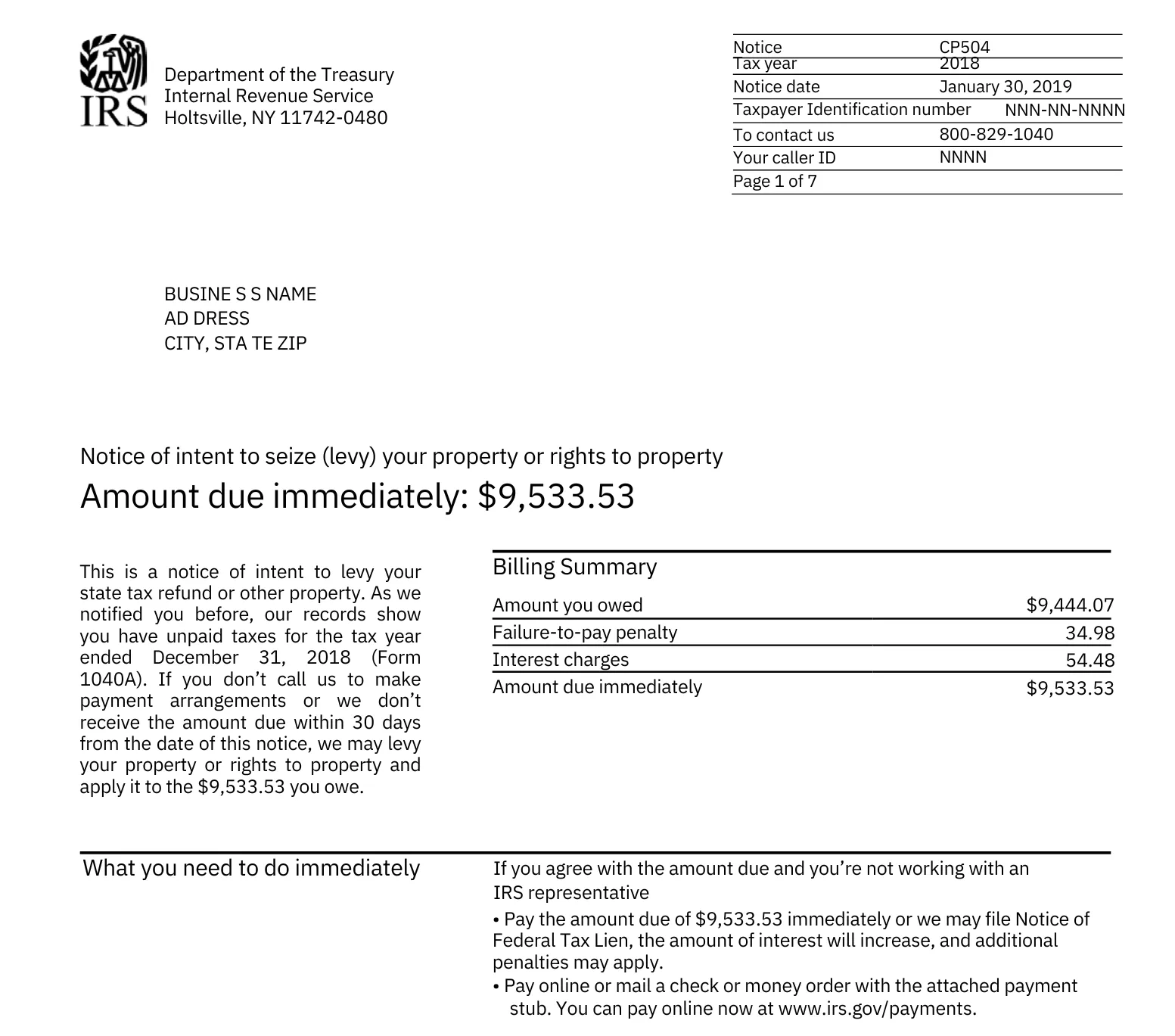
A rate that "stays the same" quarter to quarter can create a false sense that nothing is happening. Nothing changed for the IRS. Something changed for anyone carrying a balance through another ninety days of daily compounding without a plan in place. We see this most often with clients who received a CP14 or CP504 notice earlier in the year, set it aside, and come to us months later with a number noticeably larger than the one on the original notice, none of it explained by anything but interest and penalty stacking quarter after quarter. Clients we've worked with in Los Lunas and across the metro tend to be surprised less by the rate itself than by how much of their current balance is interest and penalty rather than the tax they originally owed.
Our network includes people who spent years processing these accounts from inside the IRS. They can read a transcript and separate the original tax, the penalties, and the accrued interest into three distinct numbers, then tell you honestly which of the three is actually negotiable. That's a different starting point than a sales pitch promising to make the whole balance disappear. Some of it is fixed by statute. Knowing which part is the first step to doing something about the rest.
If You're Carrying a Balance Into Q4
The rate resetting, or in this case not resetting, is a reasonable prompt to actually look at the account rather than let another quarter of daily compounding pass unaddressed. Pull your transcript, or have someone pull it for you, and see exactly how the current balance breaks down between tax, penalty, and interest. From there, an installment agreement, an Offer in Compromise, or Currently Not Collectible status each does something different to the account, and the right one depends on income, assets, and how much of the ten-year collection statute is left to run. A free consultation gets you that breakdown without any commitment to hire anyone.
Frequently Asked Questions
Does IRS interest ever go away if I genuinely can't pay?
Not automatically. Currently Not Collectible status pauses active enforcement, like levies, when paying anything would create hardship, but interest keeps accruing on the balance in the background. The balance stops growing only once it's paid in full, settled through an accepted Offer in Compromise, or the ten-year collection statute runs out.
Can penalty abatement lower the interest too?
Not directly. Penalty abatement, including First-Time Abate, removes or reduces penalties like failure-to-file and failure-to-pay. It doesn't touch interest. Since part of the interest calculation includes interest charged on unpaid penalties, removing a penalty can shrink your total bill, but there's no general request to abate interest itself outside of narrow cases involving an unreasonable IRS error or delay.
How does the IRS calculate the 7% rate?
Under Internal Revenue Code Section 6621, the underpayment and overpayment rate for individuals equals the federal short-term rate plus three percentage points, reset every quarter based on rates from the prior month. For the quarter beginning October 1, 2026, that formula produced 7%, compounded daily, per IR-2026-98.
Does an installment agreement stop interest from accruing?
No. An installment agreement stops new enforced collection action, such as a levy, once it's accepted and you stay compliant, but interest continues to accrue on whatever balance remains unpaid. Paying more than the required minimum each month is the only way to cut the total interest paid over the life of the agreement.
What's the fastest way to stop a balance from growing?
Paying it in full stops the clock immediately. Short of that, the realistic options are an accepted Offer in Compromise that settles the debt for less than the full amount, or working the balance down faster than the minimum installment payment requires. Waiting out the ten-year collection statute is rarely a sound plan, since liens, levies, and wage garnishment can all happen well before that clock runs.
Get your free tax debt action plan.
15 minutes with our resolution team. A concrete plan, yours to keep. No obligation, no pressure.